DiPeCoS: Digital Pedagogy Competence Scale
Created an 8-item scenario-based assessment of teachers' digital pedagogy competence, validated with 1,315 teachers using IRT. Items show good discrimination and appropriate difficulty, forming a unidimensional construct grounded in UDL.
As education digitizes, teachers need more than ICT skills—they must leverage technology to transform teaching practice. Yet most digital competence measures rely on self-report, which is vulnerable to bias and doesn’t assess applied knowledge. DiPeCoS uses scenario-based assessment to evaluate teachers’ digital pedagogy competence through choices in real teaching situations. Validated with 1,315 teachers in India.
What it measures
An 8-item scenario-based assessment grounded in Universal Design for Learning (UDL). Teachers respond to realistic classroom scenarios involving technology integration—their choices reflect underlying digital pedagogy competence. Unlike self-report (“I am confident using technology”), scenario items assess applied competence (“In this scenario, which approach best supports diverse learners?”).
Approach
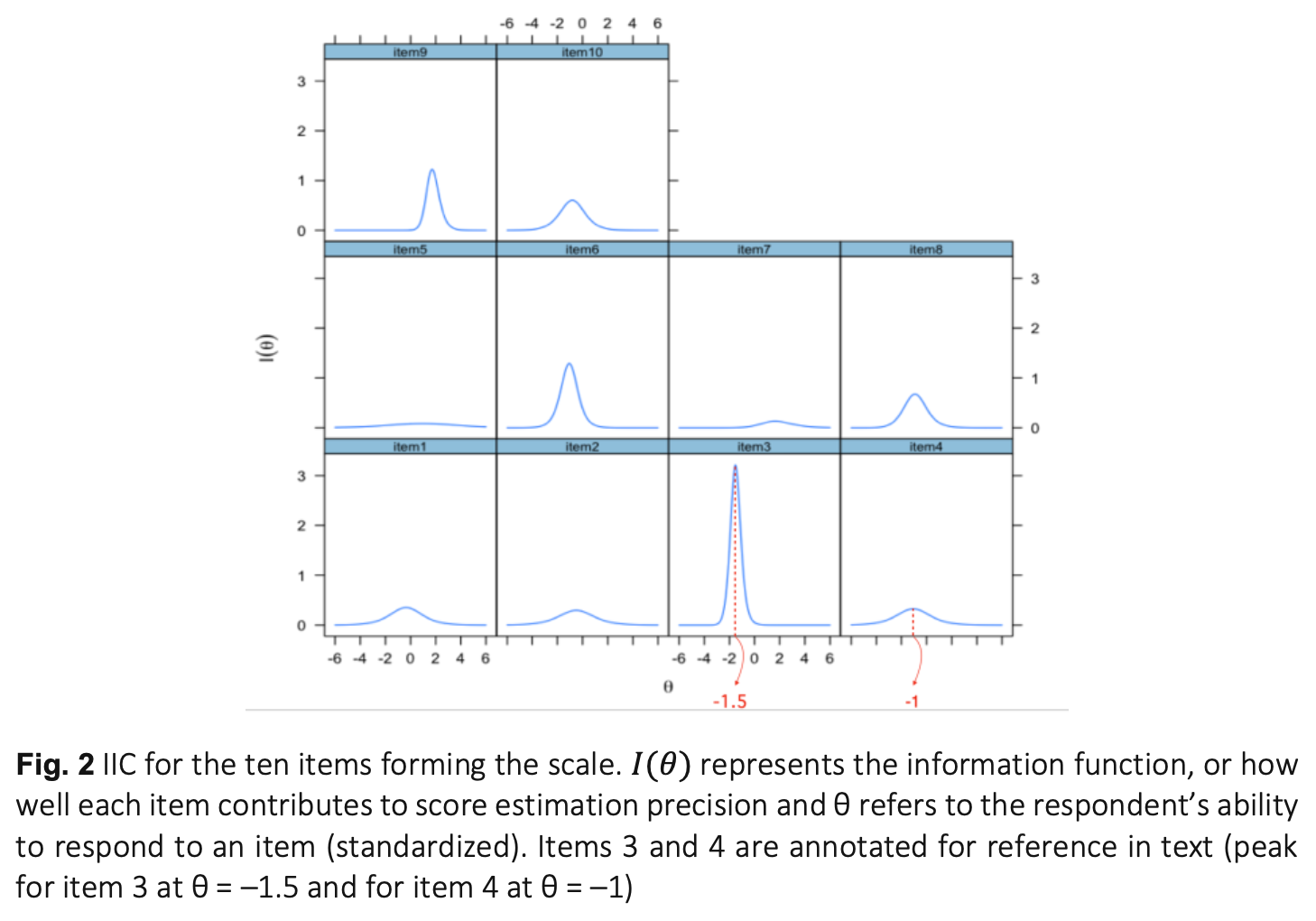
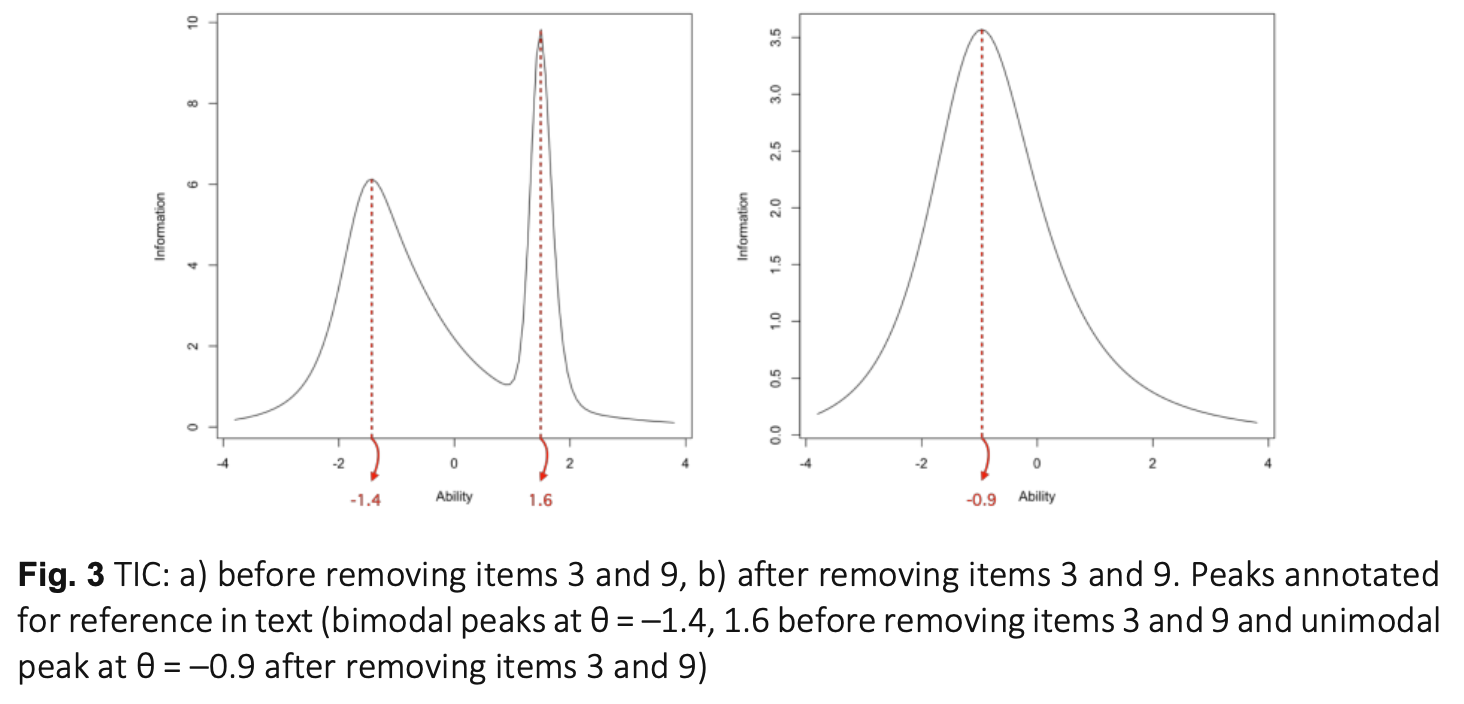
Reduced from 10-item pool to 8 items using IRT diagnostics. IRT analysis evaluates whether items function as intended, identifying items with poor discrimination or excessive guessing.
Results
Unidimensional structure confirmed—items tap a single underlying construct (digital pedagogy competence). Acceptable item properties: good discrimination (items distinguish high vs. low competence), appropriate difficulty range (spans novice to expert), acceptable guessing (not driven by chance). Strong reliability after removing two poorly functioning items. Brief format balances depth with burden.
Why it matters
Scenario-based measurement beats self-report. Self-report captures perceived competence; scenarios capture demonstrated competence in simulated contexts. IRT is essential for scenario items—identifying poorly discriminating items and excessive guessing improves precision. Unidimensionality can emerge from complex constructs. For teacher development, DiPeCoS enables pre/post assessment of training programs, targeted intervention based on IRT-derived competence levels, and cross-context comparison with a validated instrument.