Game-Based Learning: Building Knowledge and SEL Competencies
Designed a course centered on 'Bury me, my Love' and tested it with 201 adolescents across India and UAE. Found significant increases in both migration knowledge (p<0.001) and empathy/compassion, with interesting gender effects.
Digital games can be powerful pedagogical tools, but most implementations focus narrowly on either content knowledge or social-emotional learning—not both. We investigated whether a structured course centered around a digital game could simultaneously build domain knowledge (migration and refugees) and social-emotional competencies (empathy and compassion) in adolescents. Tested with 201 participants (ages 13–18) across India and UAE.
What we tested
Game-based course design using Bury me, my Love (following a Syrian refugee’s journey) as central text. Structured activities include guided gameplay, reflective journaling, group discussions, and connections to real-world migration contexts. Pre-post measures assessed changes in knowledge, empathy, and compassion using standardized self-reports.
Approach
Mixed ANOVA design tested intervention effects across gender and country. Rather than treating games as standalone experiences, the course frames gameplay within a structured learning sequence.
Results
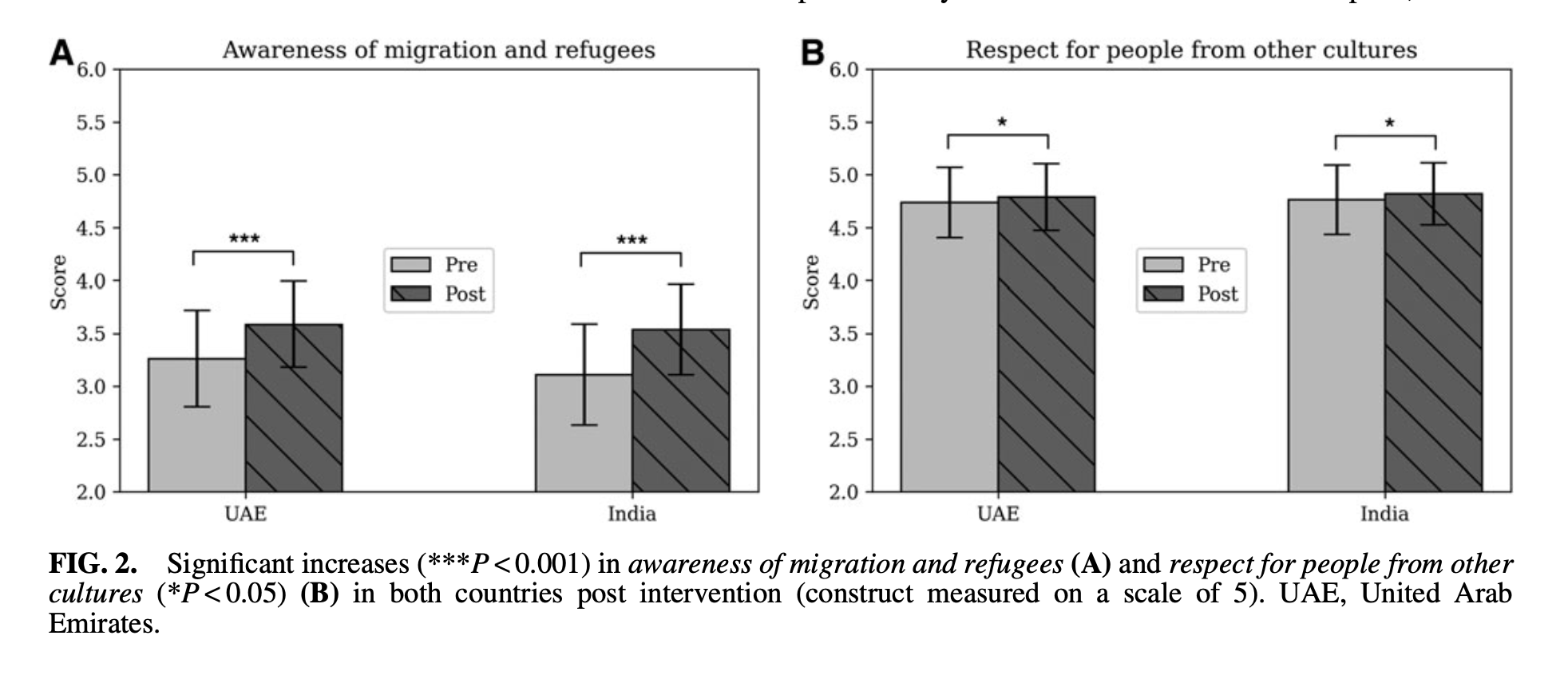
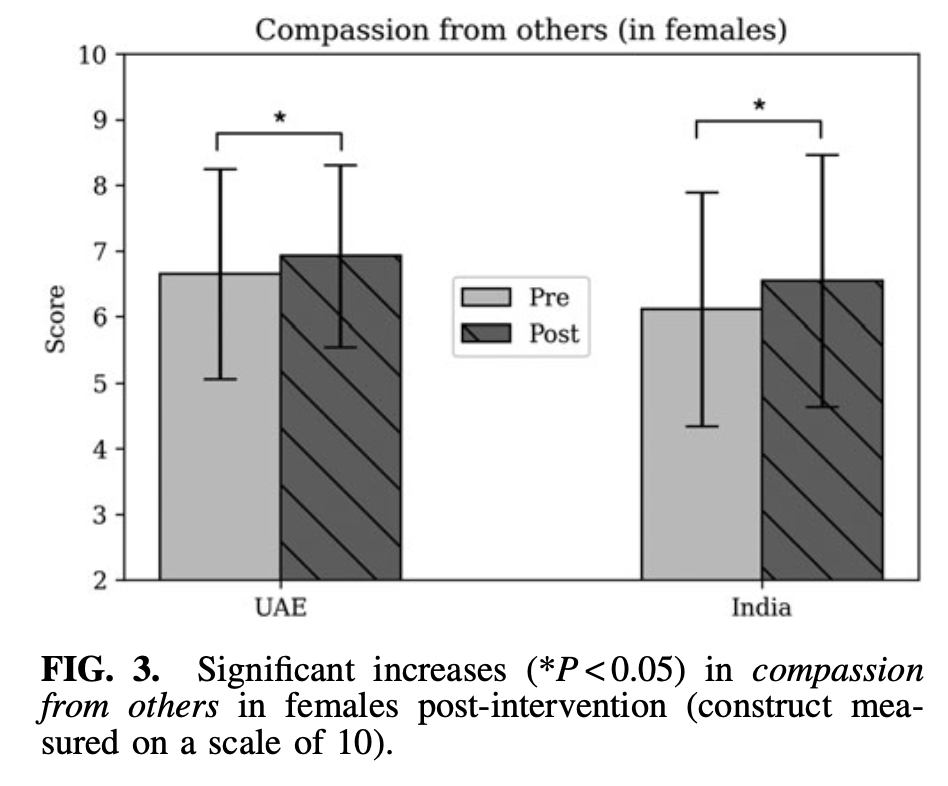
Significant knowledge increase in both India and UAE (p < 0.001). Increased empathy across both countries. Gender effects: females in both countries showed significant increases in compassion from others (p < 0.05). Cross-cultural effectiveness: intervention worked in both South Asian and Middle Eastern contexts. Dual outcomes achieved simultaneously—both domain knowledge and social-emotional competencies improved.
Why it matters
Game-based learning can achieve dual goals when designed with intentional pedagogical structure. Rather than standalone gameplay, structured courses prompt reflection, discussion, and real-world connection. Practical implications: games offer scalable, engaging ways to integrate SEL + content (works across diverse contexts like India and UAE), and gender differences in compassion suggest opportunities for targeted approaches. Digital games can be pedagogically leveraged to create engaging experiences that address both cognitive and socio-emotional development—outcomes traditional instruction often treats as separate.