Global Citizenship Identity Mediates Knowledge, Skills, and Engagement
Mediation analysis with 249 participants showing global citizenship identification accounts for 70.7% of critical inquiry's effect on engagement, 39.9% of awareness's effect, and 33.6% of empathy's effect. Critical inquiry has no direct effect without identity.
The UN Sustainable Development Goals call for collective action, yet translating individual knowledge and skills into active engagement remains challenging. Global citizenship education programs focus on building awareness, critical thinking, and empathy—but do these directly drive engagement, or does something else mediate the relationship? We investigated whether global citizenship identification mediates pathways from knowledge, cognitive skills, and socio-emotional skills to engagement with global issues. Study with 249 participants.
What we tested
Mediation analysis examining three pathways to engagement:
- Awareness of global issues → engagement
- Critical inquiry → engagement
- Cognitive empathy → engagement
With global citizenship identification as mediator. First study to test whether identity-based mediation explains how knowledge/skills translate into action.
Approach
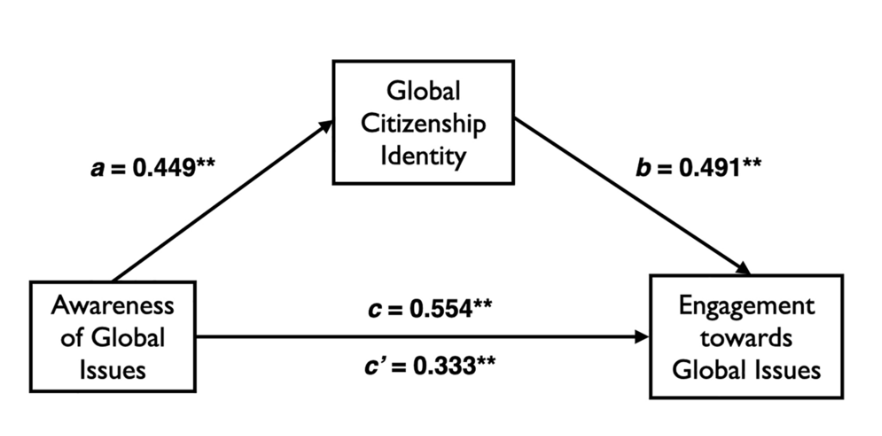
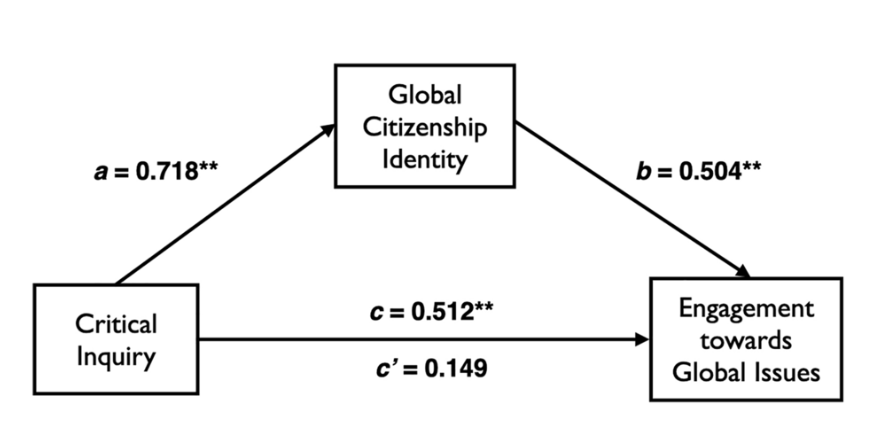
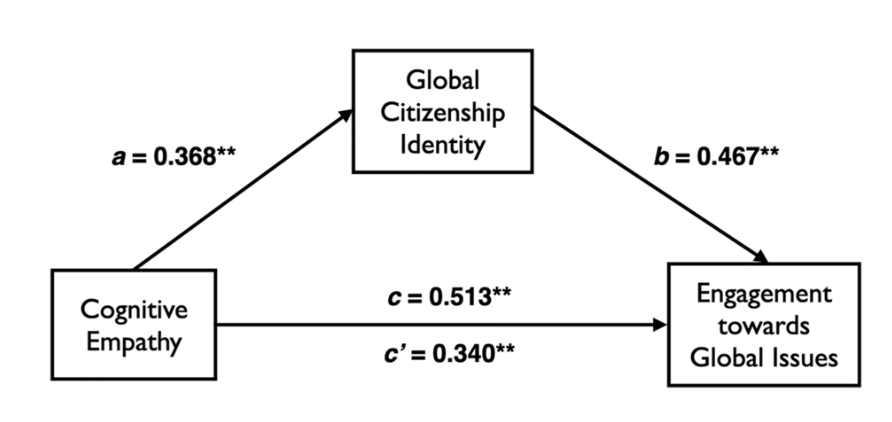
Mediation analysis tests whether global citizenship identification (feeling part of shared human group) explains why knowledge and skills predict engagement. Decomposes total effects into direct (predictor → outcome) and indirect (predictor → mediator → outcome) pathways.
Results
Global citizenship identification significantly mediates all three relationships. Critical inquiry: 70.7% mediated by identity (no direct effect without identity). Awareness: 39.9% mediated (strong direct effect remains). Cognitive empathy: 33.6% mediated (strong direct effect remains). Awareness and empathy have direct effects even without identity. Critical inquiry has no direct effect—operates entirely through identity.
Why it matters
Knowledge and skills alone are insufficient—identity formation mediates translation into engagement. Implications for global citizenship programs: identity-based interventions matter (foster global citizenship identification, not just teach knowledge/skills), critical inquiry is identity-dependent (its effect operates entirely through identity—critical thinking without identity formation may not drive action), awareness and empathy have dual pathways (both direct and through identity). Programs should go beyond content delivery to foster sense of belonging to global community, frame learning within identity development, and create opportunities for identity expression through action. Achieving SDGs requires not just informed, skilled individuals—but individuals who identify as global citizens and feel personally connected to global challenges.