SELOS: Social and Emotional Learning and Orientation Scale
Developed and validated an 8-item SEL scale in Hindi with 4,352 students. EFA and CFA revealed a two-factor structure with strong reliability and partial measurement invariance across gender.
Most SEL measures are developed in English for Western contexts, leaving a gap in culturally relevant, validated instruments for non-English speakers. As SEL programs expand globally, measurement validity in diverse contexts becomes critical. We developed SELOS—a short, culturally sensitive 8-item SEL scale in Hindi, validated with 4,352 students.
What it measures
SELOS assesses social-emotional learning in Hindi-speaking adolescents (ages 13–17) through two validated factors:
- Self-awareness and emotional regulation
- Relationship skills and social awareness
Items were generated with cultural sensitivity, pilot tested with Hindi-speaking adolescents, then validated through exploratory and confirmatory factor analysis.
Approach
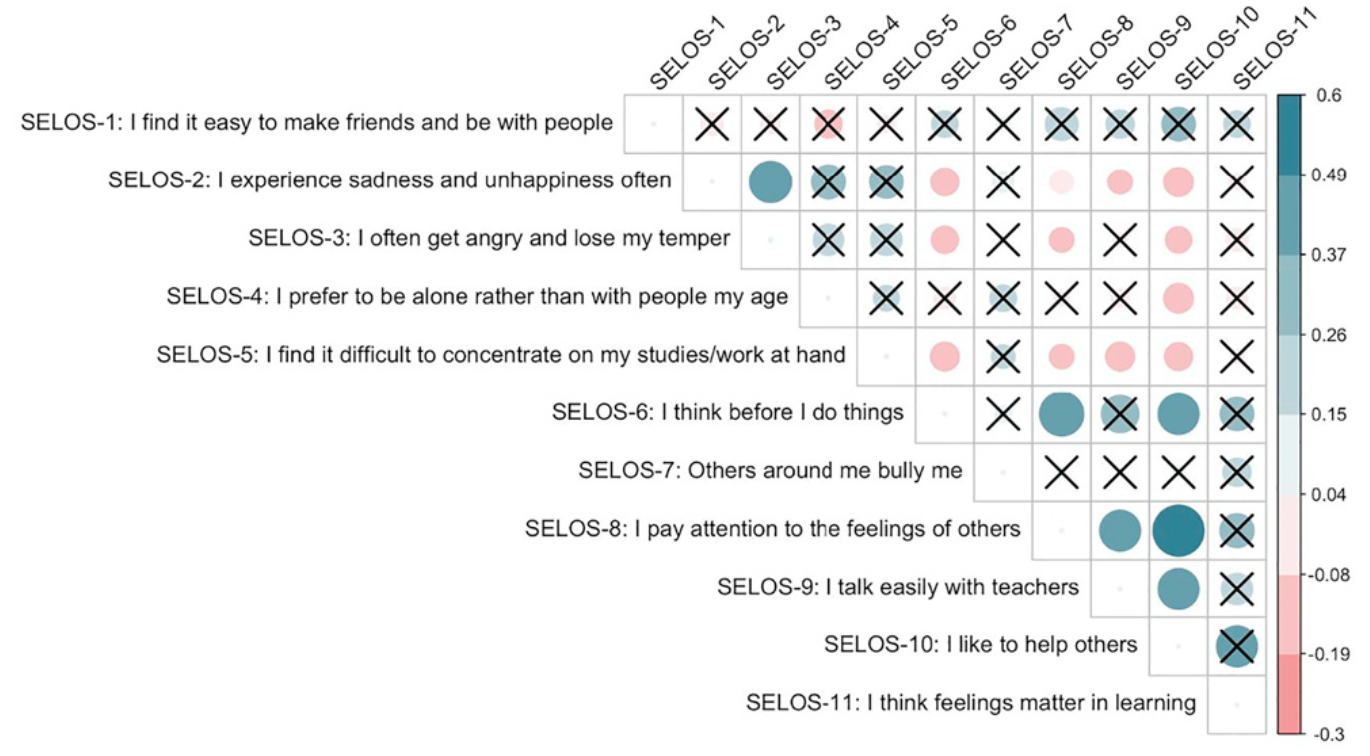
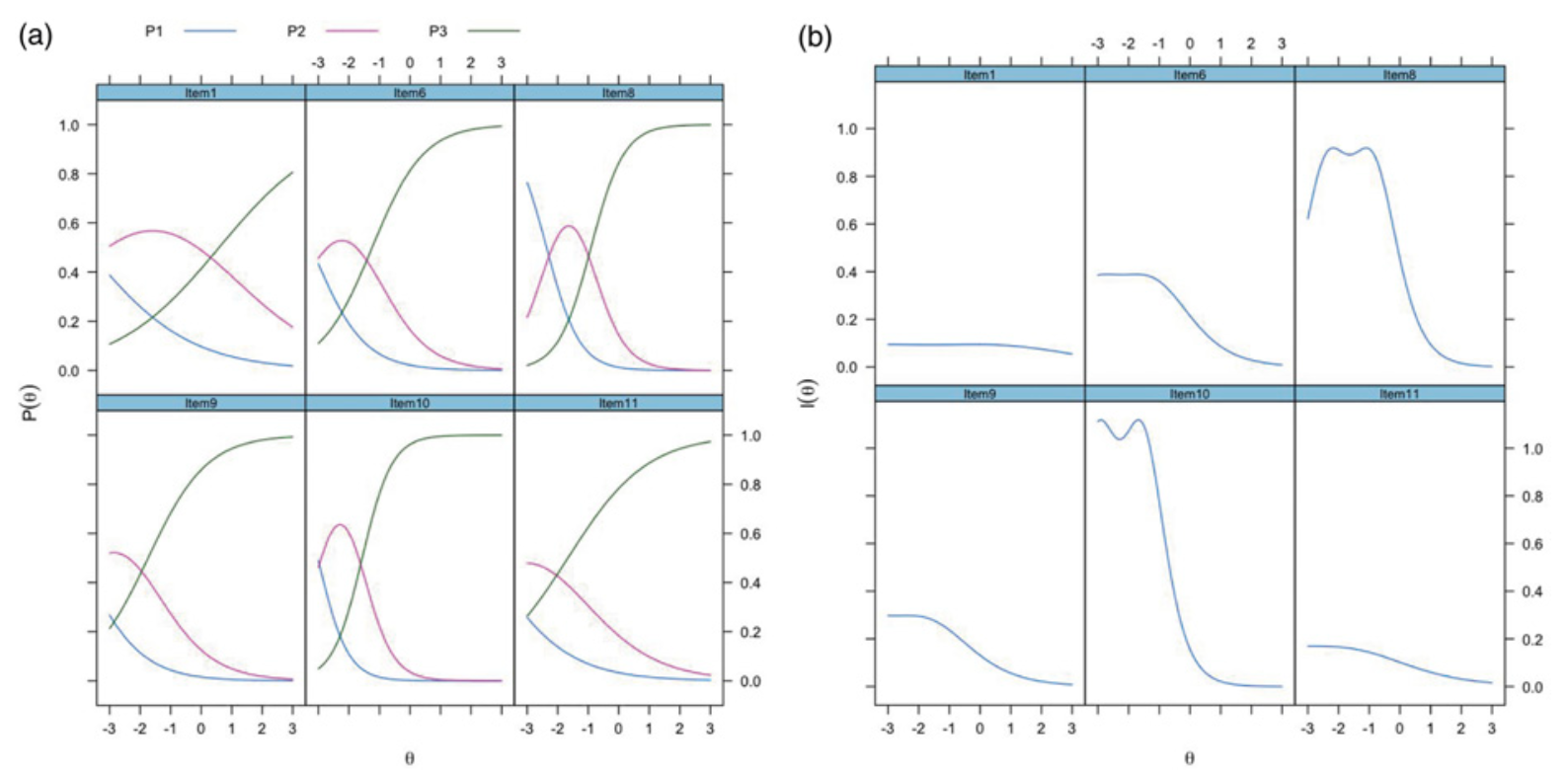
Rigorous psychometric development: culturally grounded item generation, pilot testing, EFA (N = 2,844) to uncover structure, CFA (N = 1,508) to validate fit, and invariance testing to ensure the scale functions equivalently across gender.
Results
Two-factor structure validated across EFA and CFA samples with strong internal consistency (Cronbach’s α > 0.75 for both factors). Discriminant validity established (distinct from stress and other constructs). Partial measurement invariance across gender means scores are comparable for boys and girls. Brief format (8 items) enables large-scale data collection with low burden.
Why it matters
Simply translating Western instruments risks construct inequivalence—SEL constructs may manifest differently across cultures. SELOS was developed within Hindi cultural context, ensuring items resonate with lived experiences. This supports rigorous SEL evaluation in India and Hindi-speaking regions, cross-cultural research with validated tools, and large-scale program assessment. For psychometrics, this shows measurement validity is context-dependent—start from local theory and lived experience, then validate empirically.